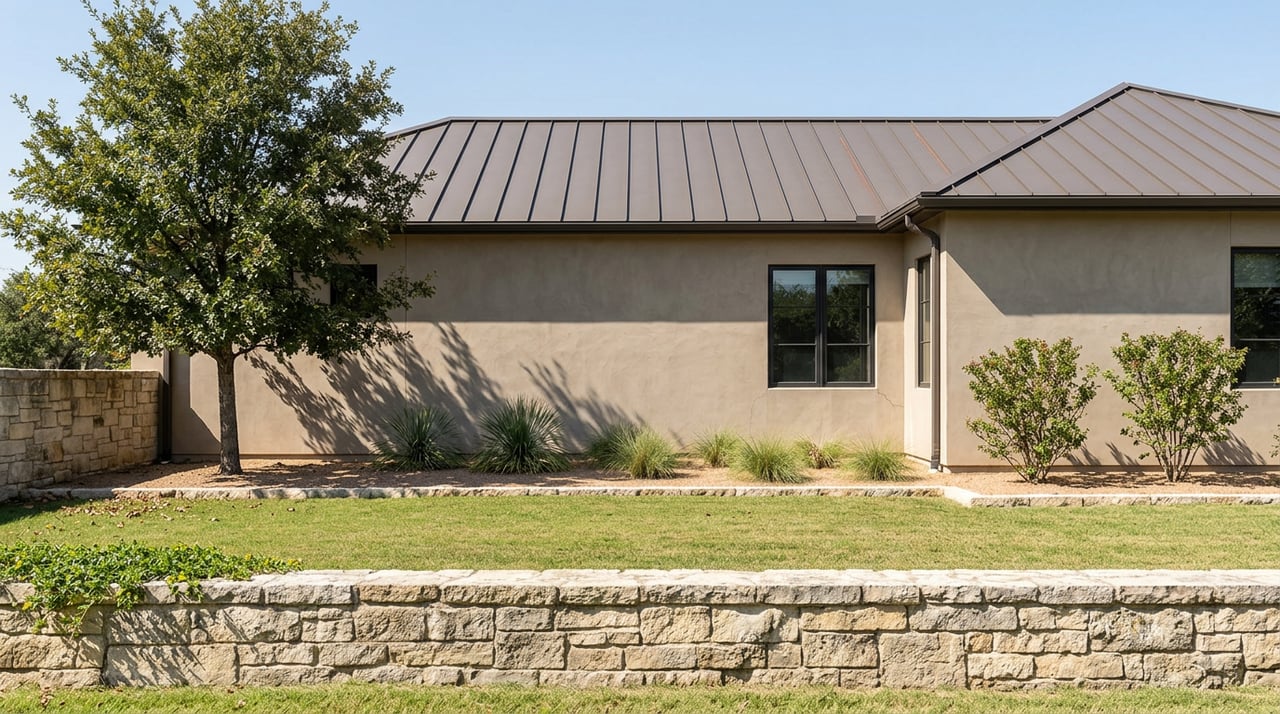
A buyer found a house last spring with a guest suite over the garage and a pool deck built for entertaining. The plan was straightforward: live in it most of the year, rent it out during Formula 1 week and a few UT football weekends to offset the mortgage. The address said Westlake. The listing said Westlake. Everyone who talked about the house called it a Westlake property.
Then the buyer applied for a short-term rental permit and found out the house sat two hundred feet outside the actual City of West Lake Hills, in a pocket of unincorporated Travis County where the city's permit system has no authority at all. No permit to apply for. No city ordinance to follow. Just whatever the county allows, plus whatever the HOA says, which in that case was less than the buyer expected.
That gap between what "Westlake" means as a lifestyle and what it means as a legal address is the thing worth understanding before you write an offer, not after.
One Name, Four Rulebooks
"Westlake" gets used the way "Hill Country" gets used, as a feel rather than a boundary. In practice, the area covers at least four separate jurisdictions, each with its own council, its own code, and its own answer to what you can and can't do with a house.
The City of West Lake Hills is a fully incorporated municipality with its own City Council, its own City Administrator, and a codified set of ordinances covering everything from zoning to short-term rentals. It is not a subdivision name or a marketing label. It is a government.
The Village of Rollingwood, its neighbor, is a separate incorporated city entirely, with its own council and its own code. A rule that applies inside West Lake Hills city limits does not automatically apply three streets over in Rollingwood, even though both places get called Westlake in casual conversation.
Then there is Austin's extraterritorial jurisdiction, the ETJ, which sits outside Austin's city limits but inside a zone where Austin retains limited authority. Inside the ETJ, Austin can regulate subdivision platting and some infrastructure, but most of its city-only rules, including zoning and short-term rental licensing, do not apply. And beyond that is plain unincorporated Travis County, where no city government has zoning authority at all and the county's own rules take over.
Four names. Four sets of rules. One shared zip code that tells you almost nothing about which one you're actually buying into.
What Actually Changes Depending on the Line
Inside the City of West Lake Hills, short-term rentals are legal, but only through a permit system the city has run since October 2016. An owner has to apply for a special use permit, prove the property is their homestead or that they own a qualifying homestead within the city, and certify that any septic system is current and that there are no open code violations. The rules that follow are specific: guest occupancy is capped at two people per rentable bedroom, the minimum stay is two consecutive nights, and the rental cannot include a separate guesthouse. Complaints about noise, parking, or trash go to the city administrator, who can revoke a permit if a violation is substantiated.
None of that applies automatically once you cross into Rollingwood, which runs its own separate ordinance, or into the ETJ, where Austin's zoning authority stops short of licensing short-term rentals at all, or into unincorporated county land, where there is no municipal permit system to apply to in the first place. In those areas, what actually governs a short-term rental plan is a mix of county rules and whatever the subdivision's HOA allows, and HOA deed restrictions can prohibit rentals under thirty days regardless of what any city or county permits.
Impervious cover works the same way. Inside West Lake Hills, the city code caps impervious cover at 25 percent for single-family lots of half an acre or larger, with a modest bonus for smaller lots already connected to central wastewater. That number determines how much patio, pool deck, driveway, and roofline a lot can carry before a variance becomes necessary, and variance requests go through the city's own Zoning and Planning Commission on a monthly calendar. Cross into the ETJ or the county, and that specific cap and that specific approval process no longer apply. A different authority is doing the measuring, on a different set of rules.
Fire service tells a similar story from the other direction. Even inside West Lake Hills city limits, fire review and emergency response run through Travis County Emergency Services District 9, not a city fire department, which means the city and the surrounding county share more infrastructure than the jurisdictional map might suggest. Water and septic follow their own separate logic again, with Travis County Water Control and Improvement District 10 and county environmental health rules covering the ETJ and unincorporated pockets.
Here's how the pieces line up:
| Area | Who governs it | Short-term rental rule | Impervious cover and building authority |
|---|---|---|---|
| City of West Lake Hills | West Lake Hills City Council | Permit required: homestead status, two-night minimum stay, occupancy capped at two guests per rentable bedroom | City code caps impervious cover at 25 percent on lots of 0.5 acre or larger |
| Village of Rollingwood | Rollingwood Council | Separate city ordinance, distinct from West Lake Hills | Governed by Rollingwood's own code |
| Austin ETJ parcels | Austin regulates subdivision and some infrastructure only | Most Austin zoning, including short-term rental licensing, does not apply | Largely governed by county building rules rather than city zoning |
| Unincorporated Travis County | Travis County | No city permit system; county rules and any HOA deed restrictions control | Travis County building code, plus county and state rules for septic |
The Mix-Up Even Careful Guides Make
Part of why this confusion persists is that even market write-ups aimed at buyers sometimes get the basic fact wrong. More than one 2026 property tax roundup for the Austin area describes West Lake Hills as an unincorporated community, grouping it with places that genuinely have no city government. It's an understandable mistake given how often the name gets used loosely, but it isn't accurate. The city's own code of ordinances, its zoning map, its City Council, and its City Administrator all say otherwise. West Lake Hills is incorporated. It has been running its own short-term rental ordinance since 2016 and its own impervious cover code long before that.
The confusion matters because a buyer who reads that West Lake Hills is unincorporated might reasonably assume there's no city permit process to worry about, no city zoning map to check, no city administrator who can revoke a rental license. That assumption is backwards for anything actually inside city limits, and it's exactly the kind of detail that surfaces at the worst possible moment, after an offer is in and a rental plan depends on it.
What to Check Before You Fall for a House
None of this shows up on a listing sheet, and none of it is guesswork once you know where to look.
- Pull the parcel on the Travis Central Appraisal District site and read the taxing jurisdiction listed on the record. It will tell you plainly whether the property sits inside the City of West Lake Hills, inside Rollingwood, or outside both.
- Check the property against the city's own zoning map, available through the City of West Lake Hills, rather than relying on the address or the neighborhood name a listing uses.
- If a short-term rental plan is part of the reason you're buying, confirm the permit requirements directly with the relevant city administrator's office, since the rules genuinely differ block to block and an existing permit does not always transfer to a new owner.
- Ask about HOA deed restrictions separately from city or county rules. An HOA can prohibit short-term rentals outright even where the city or county would otherwise allow them.
- If the property backs up to a lot line you're unsure about, request a formal zoning determination letter from the city, a modest fee that settles the question in writing rather than by assumption.
A Few Direct Questions
Does living in "Westlake" mean I'm inside West Lake Hills city limits? Not necessarily. Westlake is used loosely to describe a broader lifestyle area that includes the incorporated City of West Lake Hills, the separately incorporated Village of Rollingwood, parts of Austin's ETJ, and pockets of unincorporated Travis County. Only a parcel check confirms which one applies.
If my HOA allows short-term rentals, does that override city rules? No. It works the other direction. A city or county might permit short-term rentals, but an HOA's deed restrictions can still prohibit them, and that restriction holds regardless of what the city or county allows.
Can I find out which jurisdiction a specific house sits in before I make an offer? Yes. The Travis Central Appraisal District parcel record lists the taxing jurisdiction, and the City of West Lake Hills can issue a written zoning determination for a small fee. Both are worth checking before, not after, an offer depends on the answer.
A house doesn't change shape based on what you call it, but the rules attached to it absolutely do. If you're comparing homes across this part of Austin and want someone who checks the parcel before the paperwork gets complicated, Chris Krueger can walk the actual jurisdiction with you, not just the neighborhood name on the sign. Let's Work Together.